SITE 2018 The Quickfire Challenge Roundtable: How to fail fast & learn while having fun

We (Candace & Leigh) are honored to present at SITE 2018. This blog post will serve as our guide and “handout” for our roundtable session.

Inspired by reality TV cooking shows, the “Quickfire Challenge” is an educational tool created as an activity in the Master of Arts in Educational Technology (MAET) program at Michigan State University (Wolf, 2009). Over the past 8 years the Quickfire Challenge has been a core of the student learning experience. Having theoretical underpinnings in Mezirow’s Transformative Learning Theory (1991), the Quickfire Challenge is structured to create a (gently) disorienting experience which challenges traditional forms of professional development models. Quickfire Challenges are carefully crafted to impose time constraints, give specific, yet vague directions, embed tangible outcomes, all the while keeping learning at the core. By experiencing failure (and success) in this format, participants begin to rediscover the joy and creativity necessary to spark engagement in curriculum development and delivery.

For our SITE roundtable, we would like to provide attendees resources for replicating existing Quickfire Challenges (learning from practitioners who have successfully implemented the idea in K12 and teacher PD contexts) along with tools for creating their own challenges. We hope that attendees will leave with a series of experiences which can be implemented in professional development (both online and offline) contexts.


Quickfire Resources

The following links will take you to instructions and examples for several Quickfire Challenges that we have developed and run in the MAET program at Michigan State University:

MSUrbanSTEM Quickfires

Michigan State University, in partnership with global tech giant Wipro Ltd., launched an innovative fellowship program (which ran from 2014-2018) designed to empower math and science teachers in Chicago Public Schools schools to create transformative, innovative, and multimodal instructional experiences for students. One thing you’ll note as a key feature present in the majority of the MSUrbanSTEM Quickfire Challenges is the “extra spicy challenge”. In order to provide the (gently) disorienting experience for all of our fellows, the inclusion of this additional element provided an opportunity for differentiation.

Teacher-generated Quickfires

Over the years, people who have participated in Quickfire Challenges have been inspired to create & share their own versions. Here are a few examples:


References

Mezirow, J. (1991). Transformative Dimensions of Adult Learning. San Francisco , CA: Jossey-Bass.

Wolf, L. G. (2009, Aug. 19). Quickfires explained. Retrieved from http://www.leighgraveswolf.com/2009/08/19/quickfires-explained/


Reflection: #hssvalues Valuing the Syllabus as Scholarship

Last Thursday & Friday I had the tremendous opportunity to attend the Valuing the Syllabus as Scholarship workshop.  It has been a while since I’ve had the opportunity to attend a workshop (as a participant instead of a facilitator!) and my mind is spinning with all sorts of wonderful ideas (and blog posts.) To start to put fingers to keyboard, I want to explain a one of the activities we did in the workshop as I know you may find it as interesting and (immediately) useful.

We spent Thursday morning in small groups discussing a syllabus which came from the Humanities Commons.  (Side note: Humanities Commons is awesome, consider sharing your work there!)  We were clustered into groups of 4-5 people and then asked visualize (in analogue form) the syllabus.  This was a very open prompt (which I of course love!) We were given these “Chart Suggestions “ as a thought starter for our visualizations.

By going through this exercise it opened my eyes to all sorts of objects in a syllabus (from patterns of assignments, to value laden language.) This would be an EXCELLENT exercise for a department/program to go through if they are working on curriculum revisions.

In the afternoon we transitioned into discussing the Humanities Values and ways that these values appear in syllabi.

Humanities Values 1. Equity, 2. Openness, 3. Collegiality, 4. Quality, 5. Community

Finally, we finished the afternoon discussing our own syllabi.  The participants were very open and courageous – it’s not easy to put your work out to be critiqued.  By starting out the morning looking at a “neutral” syllabus, it gave us the language and proficient to be more reflective and critical of our own work.

I’m working on organizing my thoughts for some of the more philosophical discussions that arose – but I wanted to get this up and out there – if anyone in my network would like to run through this exercise, count me in! It was so thought (and action) provoking – and fun!

You can scroll through all of the #hssvalues tweets here and I’ve embedded a few below.


New Publication: Hacking Structures: Educational Technology Programs, Evaluation, and Transformation

I was elated to see the tweet from Michelle this morning that our chapter “Hacking Structures: Educational Technology Programs, Evaluation, and Transformation” in Hacking Education in a Digital Age Teacher Education, Curriculum, and Literacies has been published! I’m so proud of this chapter (and what led us to write the chapter.) Can’t wait to get a copy to see the words in print!!

Hagerman, M.S., Wolf, L.G., Woods, H. (2018) Educational technology programs, evaluation, and transformation. In Smith, B., Ng-A-Fook, N., Radford, L., Pratt, S.S. (Eds), Hacking Education in a Digital Age: Teacher Education, Curriculum, and Literacies. Information Age Publishing.

Book Cover: Hacking Education in a Digital Age

2017. It was a year!

Inspired by Catherine (who was inspired by Lorna, who was inspired by Anne-Marie), I’m going to take a few minutes to reflect on 2017.

I’ll start with tangible academic successes – these are the easiest to account for :)

Keynotes/Presentations:

Schopieray, S., Mapes, K., Long, C. P., Thomas, S., Wolf, L.G. (2017, June) Domain of One’s Own at MSU: Promoting Digital Presence and Public Scholarship. Domains 2017. University of Oklahoma. http://domains.reclaimhosting.com

Wolf, L.G. (2017, June) Keynote (virtual). Design Thinking: Going from Practice to Theory and Theory to Practice. JALTCALL 2017. Meijo University, Nagoya, Japan. https://conference2017.jaltcall.org/

Wolf, L.G. (2017, June) Facilitator. Tackling Wicked Problems Using Design Thinking. Educational Technology Organization of Michigan Summer Retreat. http://etom.org/events/etom-spring-2017-2/

Wolf, L.G. (2017, May) Keynote. What is it you do again? Discussing the intents, purposes & vocabularies surrounding learning design. 4TVirtual Conference (Online) Recording: http://www.4tvirtualcon.com/

Wolf, L.G. (2017, February) Stories from #MSUHub: Using Scrum for Innovative Educational Design. NUIGalway School of Education and St. Angela’s College, Sligo. Galway, Ireland.

Papers & Publications

Mishra, P., Gunnings-Moton, S., Wolf, L.G., Berzina-Pitcher, I, & Seals, C. (2017). Introduction: Innovative STEM Professional Development for Urban Educators: Multiple Perspectives on the MSUrbanSTEM Project. Journal of Computers in Mathematics and Science Teaching, 36(3), 211-217

Seals, C., Mehta, S., Wolf, L.G., & Marcotte, C. (2017). Theory and Implementation of an Innovative Teacher Professional Development Program. Journal of Computers in Mathematics and Science Teaching, 36(3), 219-235

Rosenberg, J.M., Greenhalgh, S. P., Wolf, L.G., & Koehler, M. J. (2017). Strategies, Use, and Impact of Social Media for Supporting Teacher Community within Professional Development: The Case of One Urban STEM Program. Journal of Computers in Mathematics and Science Teaching, 36(3), 255-267

Horton, A., Mishra, P., Wolf, L., Seals, C., & Marcotte, C.. (2017, November). Developing a Culture of Shared Practice through the use of Personal Learning Networks amongst STEM Educators. Poster presentation at the Association for Educational Communication and Technology (AECT) International Convention.

Seals, C., Mehta, S, Berzina-Pitcher, I., & Wolf, L. (2017). Enhancing teacher efficacy for Urban STEM teachers facing challenges to their teaching. Journal of Urban Learning, Teaching, & Research, 13, 135-146. https://aera-ultr.wixsite.com/ultr/journal-of-ultr

Heintz, A., Hagerman, M.S., Boltz, L.O., & Wolf, L.G. (2017). Teacher awarenesses and blended instruction practices: Interview research with K-12 teachers. Handbook for Digital Learning in K-12 Schools. Springer.

Now, some personal and professional highlights. In February, I was lucky to return to my second home to visit Science Gallery Dublin (and discuss plans for Science Gallery Lab Detroit!)

I can’t be in Ireland without stopping by my heart’s home (Galway.) While in Galway I was lucky to meet with my dear friends at the School of Education at NUI Galway & new friends at St. Angela’s College, Sligo to talk a bit about the work we’re doing at the MSU Hub. (Here’s a recap of the talk.)

Untitled

Sadly, the MSUrbanSTEM fellowship program came to a close in May (it was a 3 year grant) – this was truly a transformational experience for all involved.

#MSUrbanSTEM

Luckily, we have one more year with our Sustainability Fellows!

What an incredible & inspiring group of people! Energized after a day with the #MSUrbanSTEM Sustainability fellows

In July I had the honor of officiating Bill & Joe’s amazing wedding!

marriage officiant


After the wedding, we headed back home for two weeks in Ireland.  It was my first time traveling there on vacation! I was reunited with these amazing ladies:

4 awesome women


and even got out on the links with Scott

leigh and scott in the rain


When I got home, I was able to have some special auntie time with all of my nieces and nephew!

nieces, nephew and aunt


At the end of October I had a scheduled surgery (in my continuing saga with endometriosis) back at the Cleveland Clinic. Unfortunately they found that the endometriosis had become incredibly invasive and 5 inches of my colon (in addition to my uterus) had to be removed thanks to the disease.  I will need to go back in a few months for one more surgery, then, all will be fixed with the main offenders now gone!

open-uri20171021-18153-1hyci9p


The last few months have been a blur of recovery and getting back to work. I was lucky that Mary Carty came by for a special visit after I returned home <3


Those are some of personal the highlights of the year. I will leave you with Beannacht: A Blessing for the New Year from John O’Donohue to start 2018 (a poem I frequently referenced to get through 2017):

On the day when
The weight deadens
On your shoulders
And you stumble,
May the clay dance
To balance you.

And when your eyes
Freeze behind
The grey window
And the ghost of loss
Gets in to you,
May a flock of colours,
Indigo, red, green,
And azure blue,
Come to awaken in you
A meadow of delight.

When the canvas frays
In the currach of thought
And a stain of ocean
Blackens beneath you,
May there come across the waters
A path of yellow moonlight
To bring you safely home.

May the nourishment of the earth be yours,
May the clarity of light be yours,
May the fluency of the ocean be yours,
May the protection of the ancestors be yours.

And so may a slow
Wind work these words
Of love around you,
An invisible cloak
To mind your life.

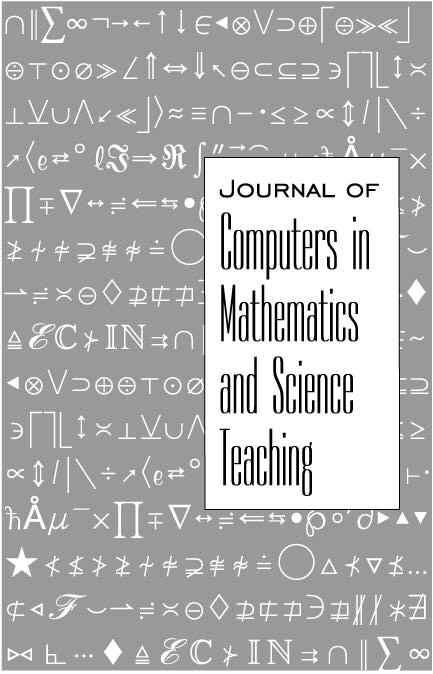
#MSUrbanSTEM Special Issue: The Journal of Computers in Mathematics and Science Teaching

After a lot of hard work – the MSUrbanSTEM special issue of The Journal of Computers in Mathematics and Science Teaching has finally arrived.  I am continually proud of this team and honored to be a part of this project.

Here is a link to the special issue: http://www.learntechlib.org/j/JCMST/v/36/n/3/ (and here is a link for MSU colleagues for direct access through the library.)


Mishra, P.,Gunnings-Moton, S., Wolf, L. G., Berzina-Pitcher, I, & Seals, C. (2017). Introduction: Innovative STEM Professional Development for Urban Educators: Multiple Perspectives on the MSUrbanSTEM Project. Journal of Computers in Mathematics and Science Teaching, 36(3), 211-217

Seals, C., Mehta, S., Wolf, L.G., & Marcotte, C. (2017). Theory and Implementation of an Innovative Teacher Professional Development Program.Journal of Computers in Mathematics and Science Teaching, 36(3), 219-235

Horton, A., Shack, K., & Mehta, R. (2017). Curriculum and Practice of an Innovative Teacher Professional Development Program.Journal of Computers in Mathematics and Science Teaching, 36(3), 237-254

Rosenberg, J.M., Greenhalgh, S. P., Wolf, L. G., & Koehler, M. J. (2017). Strategies, Use, and Impact of Social Media for Supporting Teacher Community within Professional Development: The Case of One Urban STEM Program.Journal of Computers in Mathematics and Science Teaching, 36(3), 255-267

Mehta, R., Mehta, S., & Seals, C. (2017). A Holistic Approach to Science Education: Disciplinary, Affective, and Equitable. Journal of Computers in Mathematics and Science Teaching, 36(3), 269-286

Cosby, M., Horton, A.,& Berzina-Pitcher, I. (2017). Math Is All Around Us: Exploring the Teaching, Learning, and Professional Development of Three Urban Mathematics Teachers.Journal of Computers in Mathematics and Science Teaching, 36(3), 287-305

The Idea Chairs

Idea Chairs

Last Friday, I left work late and walked out in the evening sun to a stunning sight – several sets of colorful lawn chairs in the green space between Wells Hall and Erickson Hall (the two buildings where I spend much of my time on campus.) There were lawn signs around the chairs with inspirational quotes and the statement: What’s your dream? #IDEACHAIR. I was immediately captivated by the chairs and thought about them all weekend. Every day this week I have made a point to move one of my meetings out to the “Idea Chairs.”  Classes officially started today and it was another wondrous sight to see how the chairs moved – into new configurations. How they invited conversation, joy, smiles.  If you look around campus, any of the outdoor seating is firmly bolted to the ground.  There are benches, but, sitting on them is a bit awkward for a collegial conversation.  The idea chairs on the other hand are mobile, malleable, adaptable. My friend Ira speaks to this much more eloquently than I can as to why this is so important (see: Making Learning Spaces: The Secondary Library.)

Several years ago, Alison gave me the beautiful gift of the book The Third Teacher. Loris Malaguzzi, founder of the Reggio Emilia approach said “There are three teachers of children: adults, other children, and their physical environment” (aka, the third teacher.)  The Michigan State University campus is our classroom, the campus is the Third Teacher.  The idea chairs are a small, yet wonderful reminder and example of how important it is to create an environment conducive to how we learn and interact – and how something so simple has the potential to transform. I will be watching closely over the next few weeks to see how the space continues to adapt and grow.