The role of the educator in a world with Generative AI: UCD/Sheffield University Practice Exchange Seminar

I was asked to speak at the UCD/Sheffield University Practice Exchange Seminar this afternoon (flyer below my remarks.) It has been a very long time since I’ve posted (primarily because I’ve been running at 200% getting up to speed in my new role and trying to keep the other plates that were in the air spinning!)

Instead of going the “slides” route, I wrote out my talk (something I haven’t done in a while) and, thought it would make sense to share my thoughts here. Not sure if the world needs more hot takes on GenAI, but, for better or for worse – here are my thoughts on the prompt that was given to me: The role of the educator in a world with Generative AI 

============

I’ve been working in education and “educational technology” since 1997. I started out as a network administrator at a secondary school and where I was also in charge of teacher professional development in the tech lab. The World Wide Web as we know it had gone public in 1993 and Google came online in 1998 – fundamentally changing the way we interact with information. Since then, I’ve lived through the promises and the panics at the intersection of technology and education: 1:1 devices, MOOCs, Second Life, Twitter/Social media, blockchain…all technologies that many claimed would “disrupt” higher education as we knew it. Each wave brought proclamations that the role of the educator was fundamentally, irreversibly changed. And here we are again in the GenAI era. 

I will admit this time does feel a bit different. It is commercially ubiquitous, intentionally subversive, and because it arrived at a moment when many of our students and faculty are exhausted, over-assessed, and asking questions about whether and how the work we do in classrooms matter.

When we talk about the title of this talk: “the role of the educator in a world with Generative AI,” I think we’re really asking a deeper question: What is education actually for?

Because if education is primarily a credentialing exercise, a process of producing rote artifacts or essays that demonstrate knowledge of content, then yes, Generative AI poses an existential problem. Anyone can now outsource that process to a tool that will produce something plausible, referenced, and stylistically competent in seconds. And no plagiarism detection tool can reliably catch it.

The HEA’s Principles for Ethical AI Adoption (2025), which I’m going to reference frequently in this talk, published just this past December, are very direct on this point: AI detection systems produce probabilistic scores, not concrete findings. They are, as the document puts it, “prone to both false positives and false negatives.” (p.14) They disproportionately flag the work of non-native English writers as AI-generated, while sophisticated AI users can often escape notice entirely. The framework goes so far as to say that detection tools are “not recommended as primary evidence in higher education.” (p.14) Full stop.

So if the essay or final artifact-as-proof-of-learning is no longer a reliable instrument, and detection is not the answer – what do we do?

Here is where I think we have to resist the pull toward quick fixes. Because the temptation is to respond to a technology problem with more technology. And technology companies and venture capitalists are more than happy to spin up or vibe code a tool to “fix” the problem.  

I believe that our fundamental role as educators has not changed. I would align my own educational practices and beliefs with philosophers like Paulo Freire and Nel Noddings. I reject a passive “banking model” of knowledge transfer. We must sit with and care for students, sometimes uncomfortably, in the space between what they know and what they don’t yet know. Teaching and learning is a combination of care, reflection and action and a practice that empowers people to deal critically with their reality and discover how to participate in the transformation of their world.

This is something the HEA guidance reinforces. It insists that decisions about AI integration “cannot be reduced to questions of efficiency or competitiveness” (p.2) they must be “framed in terms of educational purpose.” (p.2) What kind of learning experiences do we want to foster? What skills and dispositions should students develop? What forms of scholarly engagement do we want to protect?

Those are not new questions. They are the questions of critical digital pedagogy. They are, at their core, the questions of any well-designed education. The HEA guidance explicitly states that “thoughtful rejection of gen AI tools is as valid as critical integration when pedagogical judgement demands it.” (p.4) That is extremely important to surface. You are not obliged to embrace every tool that lands on your screen and you and your students can be “AI literate” without ever touching an LLM. 

Many educators are carrying the weight of the AI and AI and assessment challenge as if it were a personal, individual failing. As if the right response is to redesign every rubric and rebuild every assignment from scratch – alone. That is not sustainable. And it is not fair.

Again, the HEA guidance reinforces this: “These responsibilities cannot rest solely with individual academics; they require institutional systems that provide consistent support for assessment design, compliance, and AI literacy.” (p.8) It goes further by naming workload recognition, shared repositories of exemplars, advisory support structures, and programme-level coordination as institutional obligations, collective action – not individual acts of good faith.

Assessment design in the age of Generative AI, as the guidance puts it, is “no longer a purely pedagogical exercise, but a cross-cutting policy concern.” (p.9) It means that when you are struggling to know how to design an authentic assessment, or to handle a suspected case of AI-generated work, or to write a clear AI-use statement for your module brief, you are not failing. You are operating in a space that genuinely requires collective, institutional response. One that we must all contribute to.  

The guidance recommends approaches to assessment that make authorship and judgement visible: staged drafts, oral assessments, reflective portfolios, unique datasets, in-person work. Not because these are perfect solutions, but because they shift the focus back to what we actually care about: evidence of thinking, not evidence of output.

I am wary of the “AI is an opportunity” or “AI is inevitable” framing, as it can so easily slide into the kind of toxic positivity that washes over real and legitimate concerns. The HEA guidance frames its overriding commitment in very clear terms: “The adoption of generative AI in higher education must strengthen, not erode, the institution’s capacity to fulfil its mission as guarantor of legitimate knowledge and contributor to the public good.” (p.5) That is a values statement and it centres the mission of higher education. Not tools.  

The disruption caused by Generative AI is an invitation (albeit, maybe an unwelcome one), just as the disruptions we experienced during COVID were, not to reinvent education wholesale, but to ask with renewed urgency the questions we should have been asking all along. What are we actually assessing? Do our students understand why? Are we creating spaces where genuine learning can happen, or are we running elaborate compliance systems dressed up as pedagogy?

There is also something in the HEA guidance of what it calls “preserving foundational intellectual capabilities.” (p.40) Writing, critical analysis, reasoning, creative problem-solving (which as a side note also happen to be core competencies of Education for Sustainable Development) are not incidental to education. They are the point and there is a real risk that the convenience of AI could erode the productive struggle through which those capabilities actually develop.

Nearly thirty years into this work, I keep coming back to is this:

The cold digital zeros and ones of our technological tools do not change what teaching and learning is. Learning is human. Learning is relational. It is uncertain. It involves struggle, confusion and joy and success. No language model can replicate that, nor should we try to make one that does. 

The HEA guidance, in its most foundational principle, states that “human accountability cannot be delegated.” (p.4) The moral weight of educational decisions, decisions that shape human potential, cannot be handed off to a system that has no comprehension of the consequences.

I will end with three points that are hopefully practical as takeaways: 

  1. The “AI problem” is collective, not personal. If you are struggling with AI and assessment right now, that is not a failure of individual ingenuity, it is a sign that you are working in a space that genuinely requires collaboration, institutional infrastructure, shared design, and programme-level coordination. We all know about the silos in education, and I know it’s often easier to do our own thing, but…collaboration is key. 
  2. You are not obliged to embrace every tool. AI literacy does not require touching an LLM. Thoughtful, pedagogically-reasoned rejection is as valid as critical integration. 
  3. Protect the productive struggle. Writing, reasoning, critical analysis, these capabilities develop through difficulty, not around it. The greatest risk of AI convenience is not academic dishonesty. It is quietly (and sometimes not so quietly) eroding the very processes through which genuine learning happens.

====

UCD/SHEFFIELD UNIVERSITY PRACTICE EXCHANGE SEMINAR
The Role of the Educator:
AI can readily explain and contextualise concepts, design teaching materials, grade assignments, and offer wellbeing advice. How can educators support students to harness the benefits of such tools rather than blindly trust any output?

Following on from the successful seminar with Sheffield University in 2025, discussing the roles of increasingly sophisticated technologies in fostering creativity and once again under the umbrella of the Engineering and Architecture Teaching & Learning Blended Learning Community of Practice (CoP), we have planned another in-person Practice Exchange Event with Sheffield University, connecting remotely, on Wednesday, 11th March 2026.

UNIVERSITY COLLEGE DUBLIN | Dr. Leigh Wolf

Title: The Role of the Educator in a World with Generative AI

As Generative AI tools capable of explaining concepts, generating materials, and even providing feedback flood the market, the role of the educator is shifting in ways we are only beginning to understand. This presentation will explore how educators can engage critically in a world where commercially available Generative AI exists and will persist. It will also address the very real challenges AI poses for assessment and authentication of student work – challenges that no individual educator can solve alone. The role of the educator, therefore, extends to continuing to work collaboratively with colleagues, programme and module coordinators to develop institutional approaches that are both practical and pedagogically sound.

SHEFFIELD UNIVERSITY | Dr. Eleni Routoula and Prof. Mo Zandi

Title: The Role of the Educator in a World with Generative AI (Sheffield perspective)

As Generative AI becomes embedded in students’ learning practices, educators are increasingly required to move from control towards critical engagement and meaningful integration. This presentation will share emerging practice from the University of Sheffield, including the use of AI guidelines and declarations, and curriculum activities designed to support critical engagement with AI outputs. It will reflect on implications for teaching, assessment, and academic integrity, and consider how educators can support ethical and effective AI use in line with evolving expectations from industry.

Join us for an engaging discussion and Q&A!
Cross Posting: Two opportunities with the Irish Journal of Technology Enhanced Learning

In my role as an editor of the Irish Journal of Technology Enhanced Learning I would like to share two fantastic opportunities – the first is a call for special issue proposals and the second is a call for new members of the editorial team. I’m happy to field questions about either opportunity and hope you consider (or forward to someone to consider) both!

Irish Journal of Technology Enhanced Learning: Call for Special Issue Proposals

The Irish Journal of Technology Enhanced Learning (IJTEL) invites you to submit a proposal for a special issue that will showcase research and scholarship in technology enhanced learning and educational technology. As the open access journal of the Irish Learning Technology Association (ILTA), we seek to publish thematic collections that reflect the evolving landscape of digital learning research from Irish, European, and international perspectives.

What We Seek

We welcome proposals for special issues that address emerging trends, innovative or creative practices, and critical challenges related to technology in education. We particularly encourage proposals that bridge theory and practice, offering both scholarly insight and practical implications for educators, technologists, and policymakers.

Editorial Responsibilities

Special issue editors serve as scholarly leaders who shape important conversations within the technology enhanced learning community. The role requires:

Process Coordination: Being able to manage the complete editorial workflow, from initial call for papers through to final publication. This includes coordinating with IJTEL’s editorial team, overseeing the double-blind peer review process, and ensuring timelines are met.

Quality Assurance: Maintaining IJTEL’s high scholarly standards by identifying appropriate reviewers, synthesising reviewer feedback, and making editorial decisions aligned with the journal’s academic mission and standards.

Community Engagement: Promoting the special issue within relevant academic and professional networks to attract high-quality submissions and readership.

Time Commitment

Special issue editors should anticipate a 12-18 month commitment, encompassing proposal development, manuscript solicitation, peer review coordination, and final publication. The process requires consistent engagement, particularly during the review phases where timely communication with authors and reviewers is essential.

Application Process

Proposals should include:

  • A compelling rationale for the special issue theme (500-1000 words)
  • Proposed timeline from call for papers to publication
  • Editorial team qualifications and relevant expertise
  • Initial list of potential contributors or target communities
  • Draft call for papers

We seek editors who demonstrate both scholarly expertise in their proposed theme and some experience in academic publishing or editorial work. International collaborations and interdisciplinary approaches are particularly welcomed.

Why Edit a Special Issue?

Editing a special issue offers unique opportunities to shape scholarly discourse, build academic networks, and contribute meaningfully to the technology-enhanced learning field. IJTEL’s open access model ensures maximum visibility and impact for your curated collection.

Submit your proposal to: journal@ilta.ie

Deadline: 30 January 2026

Questions? Contact the editorial team at journal@ilta.ie for informal discussions about potential topics or the editorial process.


Call for Expressions of Interest Co-editor and associate editor positions for the Irish Journal of Technology Enhanced Learning

An exciting opportunity has arisen for a co-editor position and/or 1-2 associate editor roles, for the Irish Journal of Technology Enhanced Learning (IJTEL). We are looking for colleagues with a strong connection to the Irish Higher Education sector to serve in editorial roles. The new co-editor will replace the position currently held by Dr Tom Farrelly (MTU) whose vision and dedication were pivotal in establishing the journal and driving its success, and to whom IJTEL is eternally grateful. The role involves collaborating with co-editors to support the continuing dissemination of research in educational technology and technology-enhanced learning. IJTEL’s current editors and editorial board are listed here. They will contribute to the journal’s strategic development by overseeing peer review, setting editorial standards, and helping to shape the journal’s research agenda. The new associate editor(s) will engage with the editors in an ancillary role that offers an excellent introduction to scholarly publishing. The appointments will be for three years, with the opportunity to renew for a subsequent term.

About the Journal

The Irish Journal of Technology Enhanced Learning (IJTEL)  is an open access, peer-reviewed journal published by the Irish Learning Technology Association (ILTA). As an interdisciplinary publication dedicated to scholarly excellence, the journal promotes research within the Irish educational technology community and provides an important dissemination channel for research and scholarship from individual, organisational, national, and international perspectives.

The journal publishes across multiple categories including original research, extended reports, spotlight on scholarship, position papers, short reports, book and multimedia reviews. All content is made freely available under Creative Commons CC-BY 4.0 licensing to support the widest possible dissemination of scholarly work.

The Roles

We seek committed academic professionals to join our editorial team as co-editor, or as an associate editor. These positions are voluntary. They provide an opportunity to influence the research agenda and expand linkages with the broader technology-enhanced learning community. The co-editor role represents an exceptional learning opportunity with hands-on experience in academic publishing, offering valuable experience in editorial leadership and scholarly service. It involves working to set deadlines and participating in regular online meetings, along with key responsibilities of the position, as outlined below. The associate editor roles offer an opportunity to learn more about scholarly publishing and support the work of the journal in managing manuscripts, and disseminating the work of the journal.

Key Responsibilities of Co-Editors

Editorial Leadership

  • Collaborate with the existing editorial team to shape the journal’s strategic direction and learn about academic publishing strategy
  • Oversee the peer review process, developing expertise in maintaining rigorous academic standards
  • Make editorial decisions on manuscript acceptance, revision, or rejection with mentorship from experienced team members
  • Commission special issues and thematic collections, gaining experience in scholarly project management

Manuscript Management

  • Coordinate the double-blind peer review process for submitted manuscripts
  • Identify and recruit suitable peer reviewers from relevant academic disciplines
  • Provide constructive feedback to authors throughout the review process
  • Ensure adherence to IJTEL publication timelines and academic integrity standards

Community Engagement

  • Represent the IJTEL journal at academic conferences and ILTA events
  • Build relationships with potential authors and contributors
  • Promote the journal within relevant academic and professional networks
  • Support emerging researchers in publishing their work

Quality Assurance

  • Maintain the journal’s academic standards and reputation
  • Ensure compliance with open access publishing requirements
  • Oversee the journal’s indexing and discoverability initiatives
  • Contribute to continuous improvement of editorial processes

Associate Editor Profile

Manuscript Management

  • Manage manuscripts through review stages; monitor peer review workflow; recruit reviewers
  • Assist with the desktop publishing of final manuscripts

Community Engagement

  • Promote the journal in academic communities; support and encourage early-career researchers in one’s own institution towards submission; represent IJTEL at events

Quality Assurance

  • Assist in maintaining integrity, timelines, and process improvements in editorial workflows

Candidate Profiles

Applications from individuals who would like to join the team are welcome. The editorial team will make a decision based on the criteria outlined below.

Essential Qualifications

  • Connection to the Irish higher education sector or broader European context
  • Third level qualification in education, educational technology, or closely related field
  • Demonstrated research experience in technology-enhanced learning, digital education, or related areas
  • Experience with academic peer review processes
  • Strong commitment to open access publishing principles

Desirable Qualifications

  • Previous editorial experience with academic journals or similar publications
  • Familiarity with or desire to learn Open Journal Systems (OJS) software
  • Established professional networks within the educational technology community
  • Familiarity with journal management systems and publication workflows
  • Understanding of research impact metrics and academic evaluation

Personal Attributes

  • Excellent written and verbal communication skills
  • Strong organisational abilities and attention to detail
  • Collaborative approach to working within editorial teams
  • Commitment to supporting diverse voices and perspectives in scholarship
  • Enthusiasm for advancing the field of technology-enhanced learning

Terms and Conditions

These are voluntary positions with an initial term of three years, renewable by mutual agreement. The successful candidate will join a collegial editorial team and receive appropriate recognition for their scholarly service. The co-editor role requires approximately 5-10 hours per month, with workload varying according to submission patterns and special projects. For associate editor positions, it will require a commitment to support close to publication deadlines of approximately 20 hours in total per year.

Application Process

Interested candidates should submit:

An expression of interest (maximum 1,000 words) addressing:

  • Your interest and reasons for wanting to undertake the role
  • Address the essential and desirable criteria within the candidate profile and how you meet these
  • Briefly state the contribution you would bring to the editorial team

Your curriculum vitae including relevant experience and publications A brief statement (maximum 500 words) on your perspective on current trends and future directions in technology-enhanced learning scholarship and your visions for the future of the journal

Application Deadline: December 19, 2025 EOB

Enquiries and Applications: Please direct all correspondence to journal@ilta.ie with “Co-Editor Expression of Interest” or “Associate Editor Expression of Interest” in the subject line.

About ILTA

The Irish Learning Technology Association is an independent, voluntary community of professionals committed to the development and exchange of knowledge in technology-enhanced learning. With over 1,800 members drawn from Irish higher education institutions, further education providers, industry, and government agencies, ILTA provides a vibrant professional network dedicated to advancing best practices in educational technology.

The Journal of Technology Enhanced Learning is committed to equality, diversity, and inclusion. We welcome applications from candidates of all backgrounds and particularly encourage applications from underrepresented groups in academic publishing.

New Publication in Educational Action Research

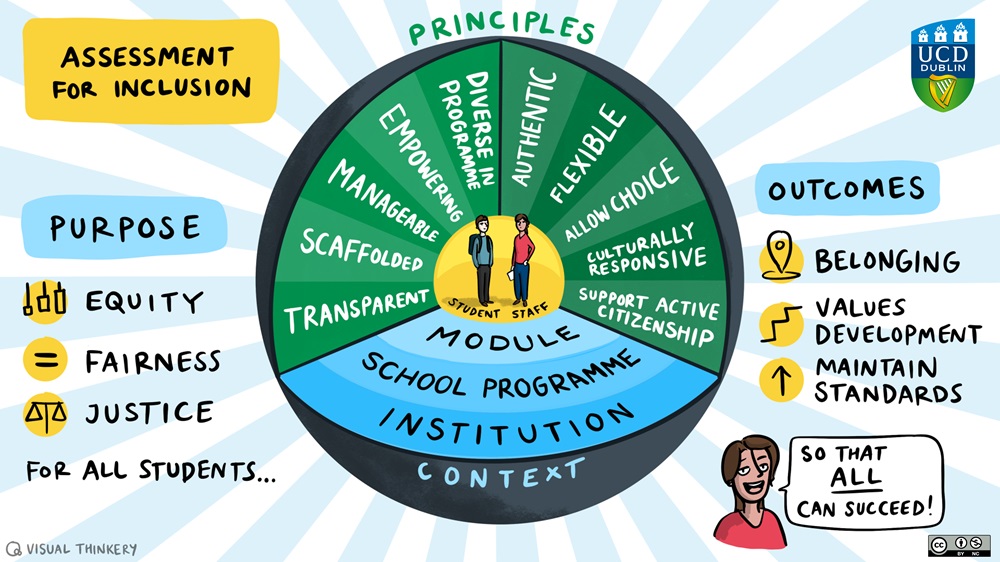
I’m so excited to share this open access publication with my colleagues Dr. Sheena Hyland & Geraldine O’Neill in Educational Action Research which shares insights and reflections on the development of the UCD Assessment for Inclusion Framework. (With special shoutout to Bryan Mathers in the article as well!)

On a personal note, it was so exciting to engage in an action research project after 5+ years of supervising dozens of amazing action research dissertations at ASU! It was an academic goal to publish in the Educational Action Research journal and they were a delight to work with. Especially thankful to the thoughtful reviews we received and to the swift and supportive editorial team.

Wolf, L. G., Hyland, S., & O’Neill, G. (2025). Embracing uncertainty: Action research and the collaborative development of an assessment for inclusion framework. Educational Action Research, , 1-17. https://doi.org/10.1080/09650792.2025.2535722

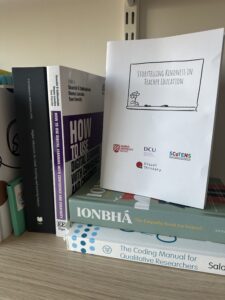
Pride of Place: Placing How to Use Digital Learning with Confidence and Creativity: A Practical Introduction on the Bookshelf

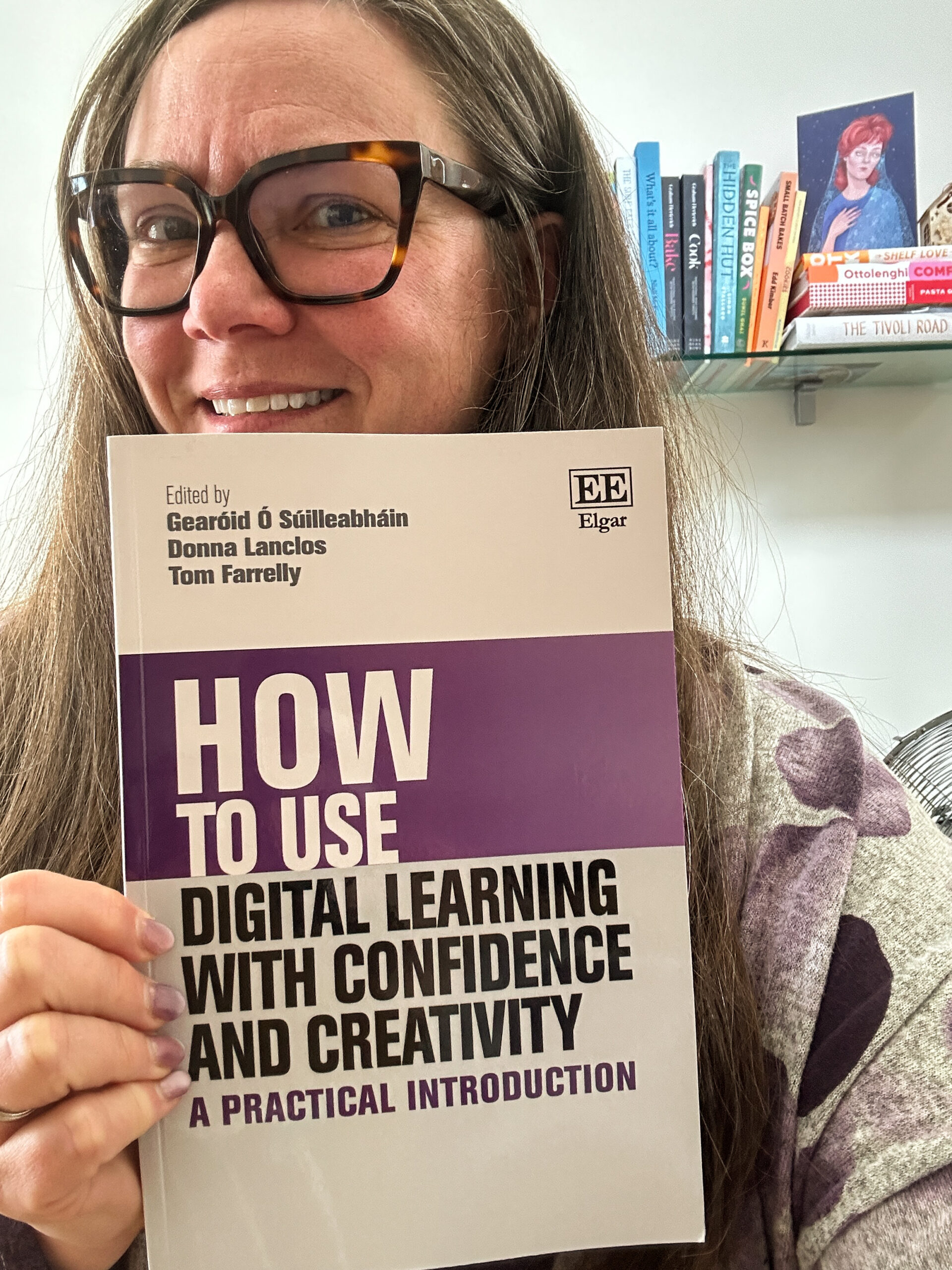
In June of 2023, about six months into settling in Ireland, I received an invitation from Tom Farrelly to write a chapter for a book he was editing with Donna Lanclos and Gearóid Ó Súilleabháin: How to Use Digital Learning with Confidence and Creativity: A Practical Introduction. I think Gearóid knew that part of my remit at UCD was to get up to speed on Education for Sustainable Development (ESD) and suggested I might contribute a chapter to their ambitious project. I was honoured to be asked and began drafting away.

Gearóid, Donna, and Tom proved to be exemplary editors throughout the process. Their feedback was always constructive, their timelines reasonable, and their communication clear and supportive. I learned so much by experiencing the “other side” of the book editing process—invaluable insights as I prepare to propose my own co-edited text. They effectively provided a master class in humane editing, demonstrating how academic rigour need not come at the expense of collegiality and mutual respect. Their approach has fundamentally shaped how I intend to work with contributors in my future editorial endeavours.

In June 2024, when the book finally launched, it was a genuine delight to see the full text come together. Perusing the table of contents digitally felt like attending a conference featuring scholars whose work had influenced my own thinking for years—what an honour to find my name listed among them! While digital format made the content accessible, there’s something that is deeply satisfying about holding a physical book. A few months ago, we received the announcement that the text was now available in paperback (at a more affordable price point) and I purchased a copy, and eagerly awaited its arrival (I love getting mail!)

When the package finally arrived, I experienced that special moment of seeing my contribution permanently bound within those pages. There’s something profoundly gratifying about holding a physical book in your hands, especially one featuring your name alongside people you admire. It represents not just scholarly achievement but also belonging to a community of practice and thought.

My sincere thanks to Gearóid, Donna, and Tom for facilitating such a thoughtful and supportive process from initial invitation to final publication. Their commitment to both scholarly excellence and human connection throughout the editorial journey demonstrates the best of academic collaboration. The book now occupies pride of place on my office bookshelf—a tangible reminder of this rewarding intellectual exchange and the warm welcome I received into Ireland’s academic community (take note however that the book has a global appeal!)


2024 (Leigh’s) Academic Year in Review

It’s that time of year again – here’s a quick recap of my academic activities for 2024, mostly for myself! I used to be very good at blogging after each event/publication but have not done the best job of keeping up this year and hope I’m not forgetting anything. It’s not a resolution (not really into those) but I do hope to make a better effort at keeping up with my documenting in the months ahead. It’s easy in academia to feel like you never do enough, so, it is helpful to pull everything together and celebrate what you DID do (start playing one of my favourite song lyrics ever written from the Tragically Hip in your head: 🎵 Besides, no one’s interested in something you didn’t do 🎵)  

Presentations

Invited Presentations 

Wolf, L.G. (2024, December 11) Rí Rá: Wayfinding through the crossroads of technology, education and research. Digital Education Conference 2024 at South East Technological University, Waterford.  

O’Neill, G.M., Hyland, S., & Wolf, L.G (2024, April 17).UCD Assessment for inclusion framework: Progress to date. QQI, AHEAD and the Disability Advisors Working Network (DAWN) Rethinking Assessment: Inclusive Assessment & Standards in a Dynamic and Changing World Conference. Dublin, Ireland. https://www.youtube.com/watch?v=UG4Gvlt_vjA 

Wolf, L.G. (2024, April 24) Post-online possibilities: Exploring open & inclusive learning here and now. OLC Innovate. (Online) https://onlinelearningconsortium.org/attend-2024/innovate/ 

Farrell, O., Wolf, L.G., Concannon, F., & Farrelly, T. (2024, January) EDEN NAP Webinar – Reflections on GenAI and Scholarly Publishing: The Story of the Irish Journal of Technology Enhanced Learning Special Issue on GenAI. EDEN Digital Learning Europe. 

Wolf, L.G., Farrelly, T., Farrell, O., & Concannon, F.  (2024, February) Editor Chat with the Irish Journal of Technology Enhanced Learning. Discussion of Special Issue on Generative Artificial Intelligence. UCD Centre for Studies in Higher Education. https://youtu.be/fj9Xyh2BcLQ?feature=shared 

Peer Reviewed

Hyland, S., O’Neill, G, Wolf, L.G. (2024, June 20-21). The development of an ‘assessment for inclusion’ framework to support understanding, explore values and enhance practice. International Assessment in Higher Education Conference. Manchester, UK 

Poster: https://bit.ly/AfI-AHE2024   

Wolf, L.G.,  Concannon, F., Farrelly, T., & Farrell, O. (2024, May 30-31). Publishing in the Irish Journal of Technology Enhanced Learning. Irish Technology Learning Association EdTech Annual Conference. Atlantic Technological University, Sligo, Ireland

Wolf, L.G.,  Gately, L., Garg, P., O’Donnell, A., & Harrington, M.. (2024, May 30-31). Reflecting on Teaching and Learning Conversations: Generative AI. Irish Technology Learning Association EdTech Annual Conference. Atlantic Technological University, Sligo, Ireland

Other

Teaching Toolkit Thursdays 

Teaching Toolkit Thursday is a monthly ‘mini’ lecture + Q&A session delivered by myself and my colleague David Jennings. We originally used it to highlight sections of the Teaching Toolkit website but the sessions ended up being fairly popular and we kept the series going. Here is a sample video and you can see the full playlist of recordings here.   

Publications

My colleagues Sheena Hyland and Geraldine O’Neill and I completed a year long action research project and published the Assessment for Inclusion Framework (can also be found here.) The framework is the result of interviews with UCD students and staff and external experts, workshops and iterative cycles of research which resulted in the current presentation of the framework. The research team worked with the amazing Bryan Mathers (Visual Thinkery) to visualise the framework and key insights from the data which you see represented through this website. The project benefited from SATLE Funding (Strategic Alignment of Teaching and Learning Enhancement), administered by the HEA and National Forum for the Enhancement of Teaching and Learning.

Inclusive Assessment Framework


I was honoured to be invited to write a chapter for How to Use Digital Learning with Confidence and Creativity edited by the incredible team of Gearóid Ó Súilleabháin, Donna Lanclos and Tom Farrelly. 

Wolf. L.G., (2024). The United Nations sustainable development Goals (SDGs) and digital learning in G. O’Suilleabháin, D. Lanclos, T. Farrelly (EdS.) How to use digital learning with confidence and creativity. Edward Elgar Publishing. https://doi.org/10.4337/9781035311293.00039 

Abstract: 

This chapter will provide a brief overview of the United Nations Sustainable Development Goals (SDGs) and how they may impact your day-to-day work and the implementation of technology-enhanced learning initiatives. The chapter begins with an overview of the SDGs, then moves on to share some benefits and challenges. Creative “thinking tools” will be shared along with key competencies for achieving the SDGs. Finally, resources and parting advice will be offered for consideration. This chapter aims to lay a foundation for those new to the SDGs, while providing ideas for further implementation and theoretical connections for those already engaged in the discussion space.

Teaching

Autumn 2024, UTL40180: Becoming a Better University Teacher. (online) University College Dublin. 

Service 

Students as Partners in Teaching & Learning 

We have a fantastic new students as partners initiative (headed by Leone Gately) and I worked with an amazing group of students to help them produce the Student Voices Podcast Series on Generative Artificial Intelligence and Student Survival Guide for Managing Assessment Load.

UCD Committees

  • UCD Widening Participation Committee 
  • Human Research Ethics Committee
  • UCD Digital Literacy Community of Practice
  • AI in Teaching and Learning Working Group 
  • Virtual Learning Environment Sub Group
  • UCD representative on the Una Europa Educational Design and Technology Cluster
  • Co-PhD Supervisor (w/Shane Bergin): Dorcas Réamonn

Beyond UCD

  • Co-Editor, Irish Journal of Technology Enhanced Learning
  • OER 2024 Conference Committee 
  • QQI AI Working Group
  • External Examiner – Technological University of the Shannon 
  • External Examiner – Dublin City University:  Doctoral Thesis, Denis Moynihan
  • External Dissertation Committee Member – Arizona State University: Stephanie Santos Youngblood
  • Reviewer for: Australasian Journal of Educational Technology, Oxford Intersections: Social Media in Society and Culture, Journal of University Teaching and Learning Practice, AERA 2025 Conference, HEA/National Forum DELTA awards

Grants and Awards

  • Generative AI Ethics and Digital Literacies in Teacher Education – Program for visiting researchers – CAS and Ligue C9 (with Michelle Schira Hagerman) 
  • How we teach and learn: Key competencies for engaging with education for sustainable development. Internal UCD Grant. Team members: Sarah Browne (lead), Olga Ioannidou, Zoe McKay, Karen Keaveney, Emma O’Neill, Celine Murrin, Leigh Graves Wolf, Emma Mescall
  • UCD Teaching and Learning Awards 2023-24 Nominee
  • My former ASU advisee, Jacob Bunch, was the winner of AERA 2024 Qualitative Research SIG Outstanding Dissertation Award.


Catching up – again

As I sit at my laptop, I’m wondering how it can be the 21st of June. I’ve completed my first full academic year at UCD and planning for my second autumn. Summer seems to be a time to catch up – and I have a lot of catching up to do. I’ve updated my CV with most of the 2024 entries and I’m woefully behind documenting everything here. I used to be very very good at doing the thing, then posting about the thing with resources. This practice was primarily for me and it was a happy consequence that it could help others too! Moving has disrupted a lot of routines and flows and I’m working hard to make new patterns.  The demise of social networks has been rough for me as well – connecting and sharing was deeeeeeply embedded in my academic workflow & thinking. (This article from Koutropoulos et al (2024) Lines of Flight: The Digital Fragmenting of Educational Networks has some beautiful reflections on feeling adrift in this space.)

So, in an effort to get a small update out – I would like to share a fun piece of work that has resulted from a year long research project on Assessment for Inclusion with my amazing colleagues Sheena Hyland and Geraldine O’Neill. You can read a bit about the project here (and check out this video!)  As a part of the project, we worked with the incredible Bryan Mathers (aka Visual Thinkery) to help us bring the framework and data to life. Below, you will see the poster we created for the Assessment in Higher Education Conference happening in Manchester (Sheena is representing us there!) this week. It was fun to get back into InDesign and Bryan made the work easy as I had all of his amazing creations to piece together to tell our story for the conference.

Hyland, S., O’Neill, G, Wolf, L.G.  (2024, June 20). The development of an ‘assessment for inclusion’ framework to support understanding, explore values and enhance practice. Assessment in Higher Education Conference. Manchester, UK  (Poster Link: https://bit.ly/AfI-AHE2024)

Academic Poster with Assessment for Inclusion Framework

Celebrating Dr. Jacob Bunch AERA 2024 Qualitative Research SIG Outstanding Dissertation Award Winner

I am beaming with pride and delighted to share that Dr. Jacob Bunch is the recipient of the AERA 2024 Qualitative Research SIG Outstanding Dissertation Award. Jacob’s dissertation Assistive Technology Lifeworlds: Inclusive Qualitative Methodological Innovations for Diverse Bodyminds is a multimodal exemplar filled with possibility and serves as a mentor text for expanding opportunities for inclusive qualitative practices. The pdf shared above is one sliver of a comprehensive whole. To fully experience the dissertation you should also explore the entire video showcase and full length documentary (embedded below.) It was a true joy and honour to co-chair this dissertation along with the incredible Dr. Nicole Bowers. We all learned so much together through this experience (which we will be sharing more widely in the years to come!) I am so sad that I cannot be at AERA in person to celebrate this achievement with Dr. Bunch. For my friends who are headed to AERA, if you run across Jacob, please be sure to stop and say hello, pass along congratulations – and welcome him into the community.

FULL VIDEO_Assistive Technology Lifeworlds: Inclusive Qualitative Methodological Innovations for Diverse Bodyminds from Dr. Jacob Bunch on Vimeo.

Irish Conference on Engaging Pedagogy Reflection

I was so honoured to be invited to speak at the 2023 Irish Conference on Engaging Pedagogy (ICEP) last week (thank you Karen!) This was my first time attending (and will not be the last!) The conference was held at CCT College Dublin – a place I walk by weekly, but have never had the chance to go in to this gorgeous spot. The minute I walked in the door I felt a warm and welcoming glow, something I haven’t felt from a conference in quite a long time! It was such a joy to (re)connect with so many and looking forward to continued discussions and collaborations.  My session was titled Teaching the Teachers: Supportive Pedagogy for Educator Professional Development and it was a great way for me to reflect back on my first semester teaching at UCD and sharing what I learned with others. Slides are below – many if not all of the images link out to resources!

IJTEL Special Issue is Live!

Irish Learning Technology Association ILTA

I’m delighted to share that the special issue of IJTEL The Games People Play: Exploring Technology Enhanced Learning Scholarship & Generative Artificial Intelligence has been published (and on time!) In September we put out a call for papers which were entirely written by AI (along with a transparent reflection on the process.) We were overwhelmed by the number of submissions and as a consequence the process has greatly helped to improve other “back end” workings of the journal.

Please take a moment to read the editorial – and of course – all of the articles that follow! Sincere thanks to the amazing editorial team (Tom, Fiona, & Orna) – it’s a joy to collaborate with you!!

Wolf, L., Farrelly, T., Farrell, O., & Concannon, F. (2023). Reflections on a collective creative experiment with GenAI: Exploring the boundaries of what is possible. Irish Journal of Technology Enhanced Learning, 7(2), 1–7. https://doi.org/10.22554/ijtel.v7i2.155 


A few quick updates & (AI) resources

It has been a busy semester! As a part of my work I’ve been tasked with co-facilitating a series of conversations around Artificial Intelligence and education.  As a part of this work, I helped to facilitate two workshops a few weeks ago and I’m sharing them out here for others to (re)use, remix, recycle. Both were highly interactive in nature and intentionally constructed to not be a “sit and get” session (there are plenty of those (many great!) that are out there.)

The first workshop (co-facilitated with Marta Bustillo & Emily Smith) is up on Humanities Commons:

Artificial Intelligence and Ethical Practice in Teaching and Learning Facilitator Guide

These are the materials associated with a one-hour workshop on artificial intelligence and ethical practice for higher education faculty, staff and students. This workshop aims to facilitate a conversation in higher education contexts about ethical ways of using AI for teaching, learning and research using three lenses: An educational lens [e.g. what is the impact of AI on teaching and learning practice?] An accessibility lens [e.g. how does AI affect accessibility of learning materials, assessment and the overall educational experience?] An information acquisition and management lens [e.g. how can we evaluate, use and trust information created using AI?] The workshop draws heavily from the Civics of Technology Project: https://www.civicsoftechnology.org/


The second was a “share and swap shop” session co-facilitated with Leone Gately. The “secret mission” doc can be found here and helps to support the activity.  Below, you’ll find an associated recap post shared with the community post-activity.

Over the past two weeks there were quite a few campus events and conversations related to Generative AI. First, was a conversation hosted by the Digital Literacies Community of Practice focused on the ethics of AI in teaching and learning. The second was our own Community Conversation (which we will recap shortly in this post) and there was also the WST October Roundtable on Disruptive Technology with a panel discussion on AI.  We know many conversations are happening across campus in informal and formal contexts – please feel free to chime in with events in this space here!

In addition to enjoying a networking lunch at our first Community Conversation we had some time to gather input into what people were already doing with AI and to generate ideas for future conversations.

When asked What AI Tools are you already using? these are some of the tools that were frequently mentioned:

Bard (other Google tools)
Bing
Casper.AI
ChatGPT
Dall-E

When asked What AI tools are you interested in learning more about? these are some of the tools were listed (There was also a desire to learn more about educational, visual and business AI tools broadly.):
Bard
Bing
ChatGPT 4
Consensus
Eduaide.ai
Grammarly
MidJourney
Otter.ai
Swapp.ai 

We also engaged in a collaborative activity to brainstorm educational experiences to help others learn more about topics related to AI. There was a strong desire for more conversations related to guidance around the use of AI and for opportunities to try out new tools. The focus of our February conversation will be “play and display” style and we will ask participants to come with tools to share and we will have opportunities for collective sharing and experimenting with various generative AI tools.  If you would like to volunteer to “display” or share, please get in touch!